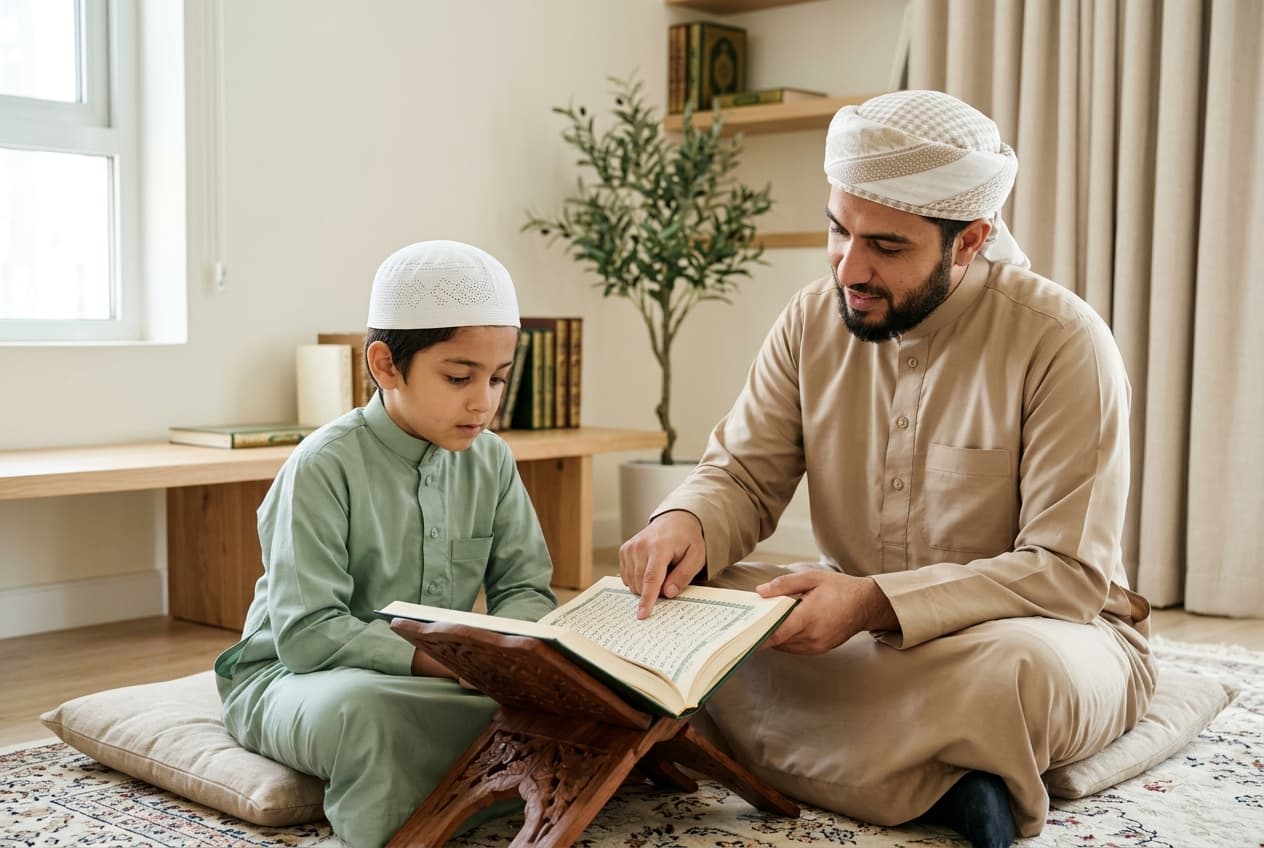
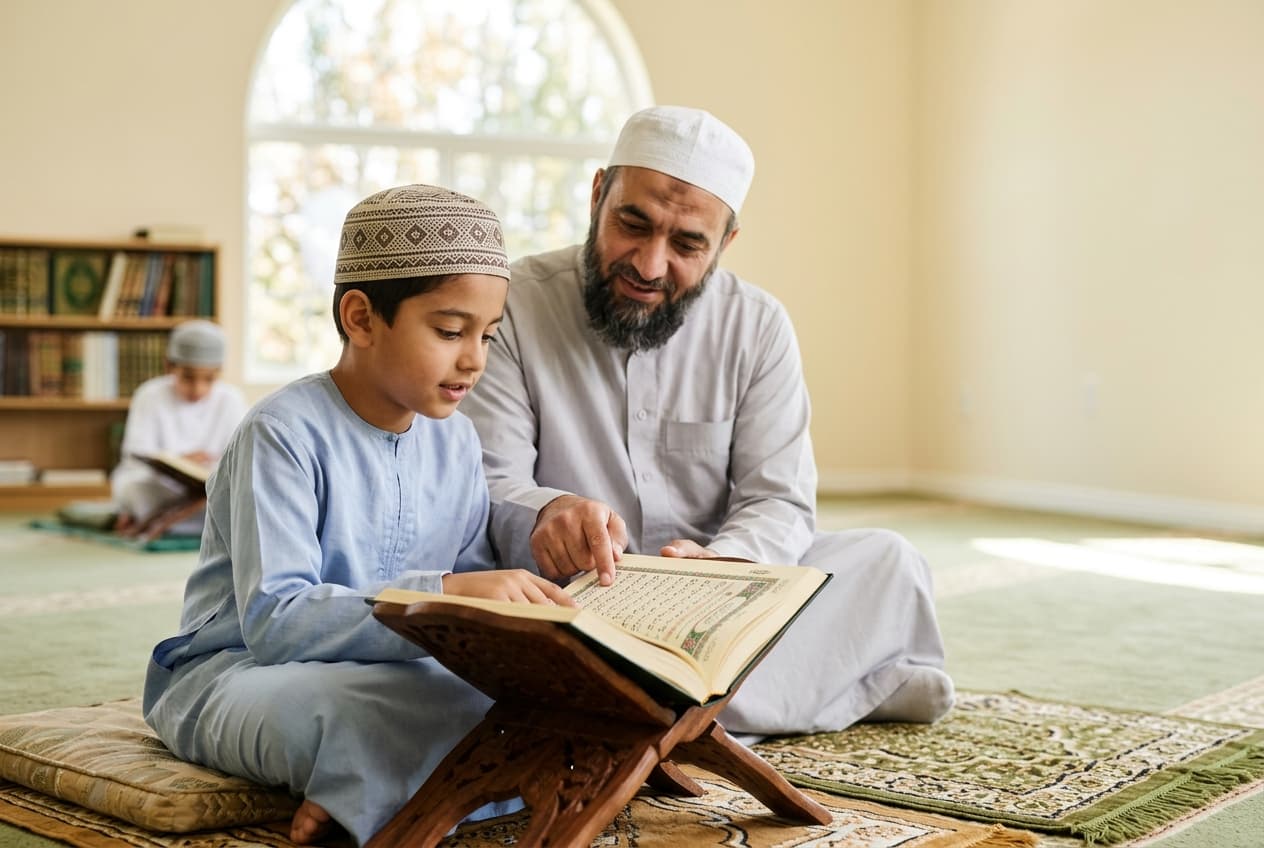
A simple step-by-step guide to Arabic letters, Noorani Qaida, pronunciation, and daily practice for anyone starting to read the Quran.
Introduction
Learning to read the Quran in Arabic is one of the most meaningful skills a Muslim can build. It brings a learner closer to the text, and many people value it more the longer they practise. If you are looking for how to read Quran for beginners, or how to read Quran step by step, this guide sets out a path from the very first letter.
If you are starting from zero, the Arabic letters may look unfamiliar and the sounds may feel strange. That is completely normal. Reading is learned in small, ordered steps, and you do not need to understand everything before you begin. People start at many different ages and from many different levels, and steady practice matters more than where you start.
The Prophet Muhammad (peace be upon him) is reported in Sahih al-Bukhari to have said, in words that encourage learning and teaching the Quran:
خَيْرُكُمْ مَنْ تَعَلَّمَ الْقُرْآنَ وَعَلَّمَهُ
Meaning: "The best of you are those who learn the Quran and teach it." (Sahih al-Bukhari, 5027, in the Book of the Virtues of the Quran.)
This guide on Quran reading for beginners explains the path in order: the Noorani Qaida, pronunciation, Tajweed, a daily routine, common mistakes, and the value of learning with a qualified teacher.
Can Beginners Learn to Read the Quran?
Yes. Beginners of every age can learn to read the Quran. Some learners start as young children, others as teenagers, and many as adults or older learners who have wanted to learn for years.
For Children
Children often learn letters and sounds quickly when lessons are short, regular, and encouraging. A calm routine and a patient teacher make a bigger difference than early speed.
For Adults and Older Learners
Adults bring focus, life experience, and clear goals to their learning. It is also common to feel self-conscious when starting from the alphabet. A good teacher is used to working with learners at every stage, and beginning from the basics is a sensible starting point at any age.
Start with the Noorani Qaida
The Noorani Qaida is a widely used beginner's primer for learning to read Arabic letters and the Quran. It introduces the letters, their forms, and the vowel signs step by step. Many teachers use it as the first stage of Quran reading, so it is a useful place to start.
Learning the Arabic Letters
Arabic has 28 letters, written from right to left. Most letters connect to the letters around them, so each one can take a different form depending on whether it stands alone, starts a word, sits in the middle, or ends it. Learn the shapes and names first, and practise each letter inside short words as well as on its own.
Harakat: Fathah, Kasrah and Dammah
Harakat are the short vowel signs. They are often called Zabar, Zer and Pesh in South Asian teaching traditions, and are known as Fathah, Kasrah and Dammah in Arabic terms:
- Fathah (Zabar) is a short "a" sound, written as a small diagonal stroke above the letter.
- Kasrah (Zer) is a short "i" sound, written as a small stroke below the letter.
- Dammah (Pesh) is a short "u" sound, written as a small curl-shaped mark above the letter.
The vowel signs change how a word is read, so the same letters with a different vowel can produce a different word. Read them carefully from the start.
Sukoon and Shaddah
Sukoon, sometimes called Jazm, is a small circle written above a letter. It shows that the letter has no vowel. Shaddah, also called Tashdeed, is a small mark shaped like a little "w". It shows that a letter is doubled and should be pronounced with a clear emphasis. Learn these once the three main vowel signs feel comfortable.
Madd
Madd means extending a vowel sound for a set length. Beginners often meet it early in the Noorani Qaida. Its exact lengths and rules are part of Tajweed, so learn them with a teacher who can demonstrate them and listen to your practice.
Learn Correct Pronunciation
Pronunciation is central to reading Arabic correctly. Some letters that look or sound alike to a beginner are distinct in Arabic, and the difference can change a word's meaning.
Scholars of recitation describe the articulation points of letters, known as Makharij, which are the places in the mouth and throat where each letter is produced. Knowing that these points exist helps you understand why a letter sounds the way it does. Learning the exact points and the Tajweed rules that follow from them is best done with a qualified teacher, who can hear your recitation and show you how to correct it.
Recordings can help you hear the sounds, but they cannot correct your own articulation. For that reason, pronunciation should be checked with a qualified teacher wherever possible.
Find a Qualified Quran Teacher
A qualified teacher gives you something a book cannot: individual feedback. A teacher can hear the exact sound you make, point out what needs adjusting, and help you practise the correction until it feels natural. This is especially valuable in the early stages, when beginners cannot yet hear their own mistakes clearly.
When in-person teaching is not available, you can learn to read Quran online with a qualified teacher. This is a practical option. It can give you live feedback and a structured course, provided the teacher is qualified and the lessons include correction and practice, not only listening.
Follow a Step-by-Step Learning Plan
A sensible sequence moves in small, clear steps. Do not move on until the current step feels reliable.
- Step 1: Recognise the Arabic letters by their shapes and names.
- Step 2: Learn the correct sound of each letter, with feedback from a teacher.
- Step 3: Learn the vowel signs, Fathah, Kasrah and Dammah, and read single letters with them.
- Step 4: Learn Sukoon and Shaddah, and practise joining letters into short combinations.
- Step 5: Read simple words, then longer words, using the vowel signs.
- Step 6: Practise short passages slowly, correcting pronunciation as you go.
- Step 7: Gradually improve accuracy and speed through regular revision, with Tajweed added as your reading becomes confident.
Practise Every Day
A manageable routine of 15 to 30 minutes a day is more effective for most learners than occasional long sessions. Short, regular practice helps the letters and sounds stay in memory.
A simple daily session might include a few minutes of revision of earlier letters, a few minutes of new material, and a short reading of a passage you have already studied. Finish with a few minutes of listening to a reliable recitation while following the text. If you have a busy day, a shorter session still counts.
Be patient with yourself. Progress is often uneven, and a difficult week usually means it is time to revise, not that you have failed.
Common Beginner Mistakes
- Rushing ahead before the letters are familiar. Reading long words before recognising the letters leads to guessing.
- Skipping the foundational lessons because they feel too basic. Vowel signs and letter shapes support everything that comes after.
- Neglecting pronunciation. Small errors repeated every day can become habits that are harder to correct later.
- Practising inconsistently. Two long sessions a week often produce less than short daily practice.
- Being discouraged by mistakes. Mistakes are a normal part of learning. Correct them calmly and continue.
How Adults Can Learn to Read the Quran
Adults can learn to read the Quran at any stage of life. A structured plan with short, regular sessions suits most adult schedules. Choose a modest weekly goal, such as learning one group of letters, and review it regularly.
It is not possible to promise how quickly any learner will progress. Speed depends on your background, your language ability, and how much time you can practise. Measure your progress against where you started, not against other learners.
What to Learn After the Basics
Once you can read the letters and words with confidence, the next steps are more accurate reading and a deeper study of the Quran. Continued practice with a teacher helps you refine pronunciation and learn to read Quran with Tajweed in your daily reading.
When you feel ready, you can also begin studying the translation of the Quran and an introduction to Tafsir, which explains its meanings and context. Choose reliable, well-known sources and, where possible, study them with a qualified teacher. Reading the words and understanding their meanings are two different skills, and both can grow over time.
Frequently Asked Questions
Start with the Arabic letters: their shapes, names, and sounds. Then learn the vowel signs and practise reading short combinations. A qualified teacher can check your pronunciation from the very beginning.
Yes. Adults can begin at any stage of life. A structured, patient approach and regular practice are what matter most. Progress varies from learner to learner.
Many beginners do well with 15 to 30 minutes a day. Consistency matters more than length, so choose a time you can keep up with most days.
Yes. The Noorani Qaida is a widely used primer that introduces the letters, their forms, and the vowel signs in a structured order. It works best when used with a teacher who can check your pronunciation.
Tajweed helps you pronounce the letters correctly and observe the rules of recitation. Beginners usually learn its basics alongside reading, with a teacher, rather than as a separate subject to finish first.
Yes, online learning with a qualified teacher is a practical option, especially when in-person teaching is not available. Look for live lessons that include feedback and correction.
Conclusion
Learning to read the Quran begins with simple, practical steps: learning the letters, understanding the vowel signs, pronouncing each sound carefully, and practising a little every day. A qualified teacher can guide you through these steps with feedback that a book alone cannot give.
May Allah make the Quran a source of light for our hearts, make learning it easy for every beginner, and reward those who teach it.